Coburg Childrens Centre | Educational approach

Educational Approach

Meaningful connections

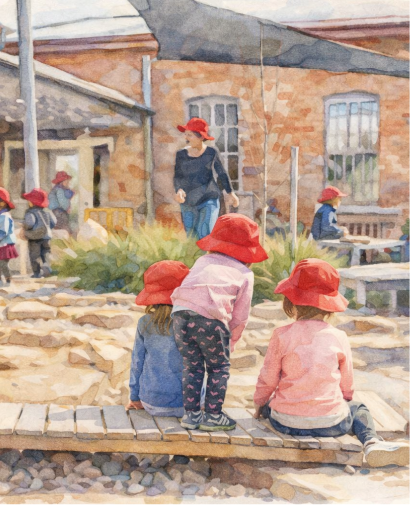
Children’s confidence in their ability to connect with others and learn comes when they are actively and purposefully involved in play.

Meaningful connections

Our Educational Approach & Learning Philosophy

Teachers and educators develop a planned program of play experiences and document examples of children’s developing knowledge, interests, skills and dispositions. The documentation that makes up the program is displayed for parents to read, question and contribute to.

You will see a balance of play experiences including – active/quiet; indoor/outdoor; structured/unstructured; clean/messy; wet/dry, with both group and individual participation opportunities offered. They include language and literature, music and
movement, art, dramatic and imaginative, science and mathematics, sensory and physical play opportunities.

Most of these experiences are presented in a way that encourages children to use their own ideas and imagination – referred to as “open-ended” play experiences. The focus is on the process of learning by doing.
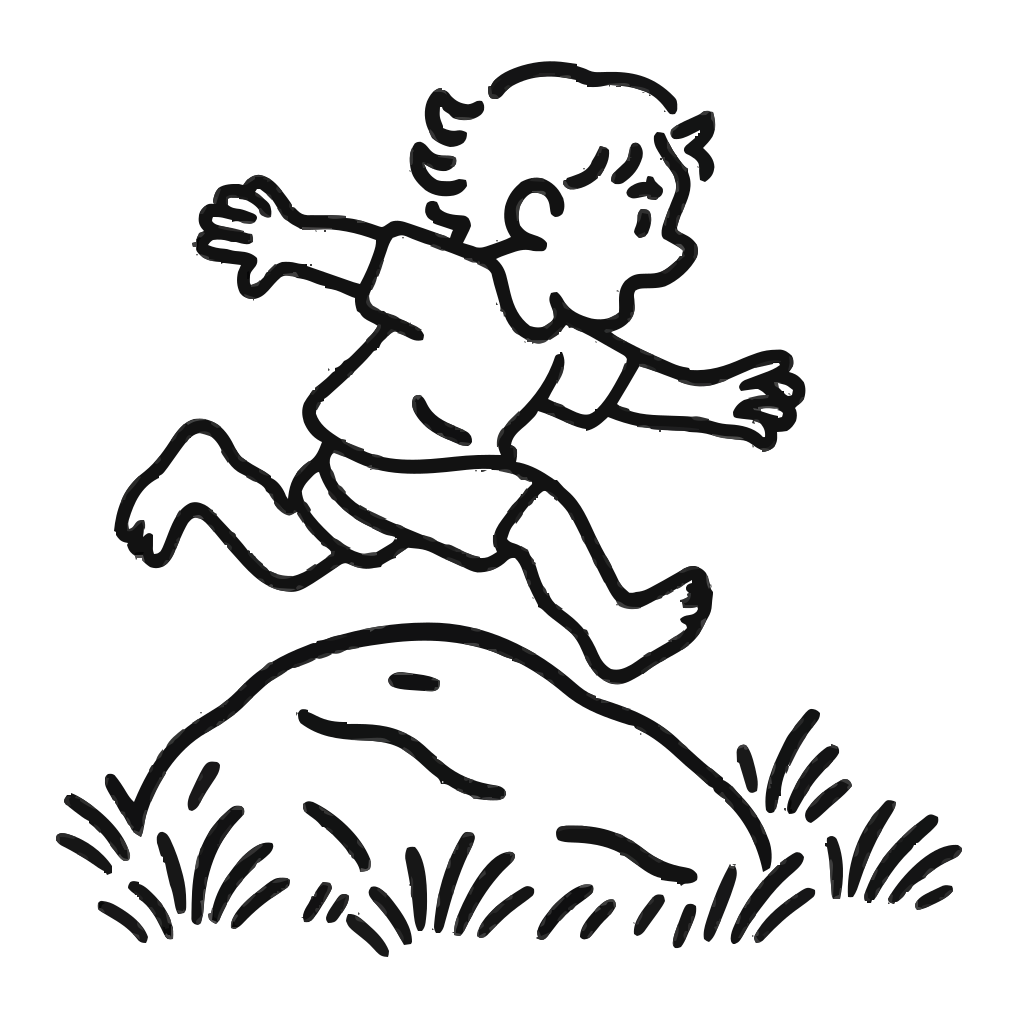
“Play is the highest expression of human development in childhood, for it alone is the free expression of what is in a child’s soul.”

Friedrich Froebel

The father of Kindergarten

Barefoot Play

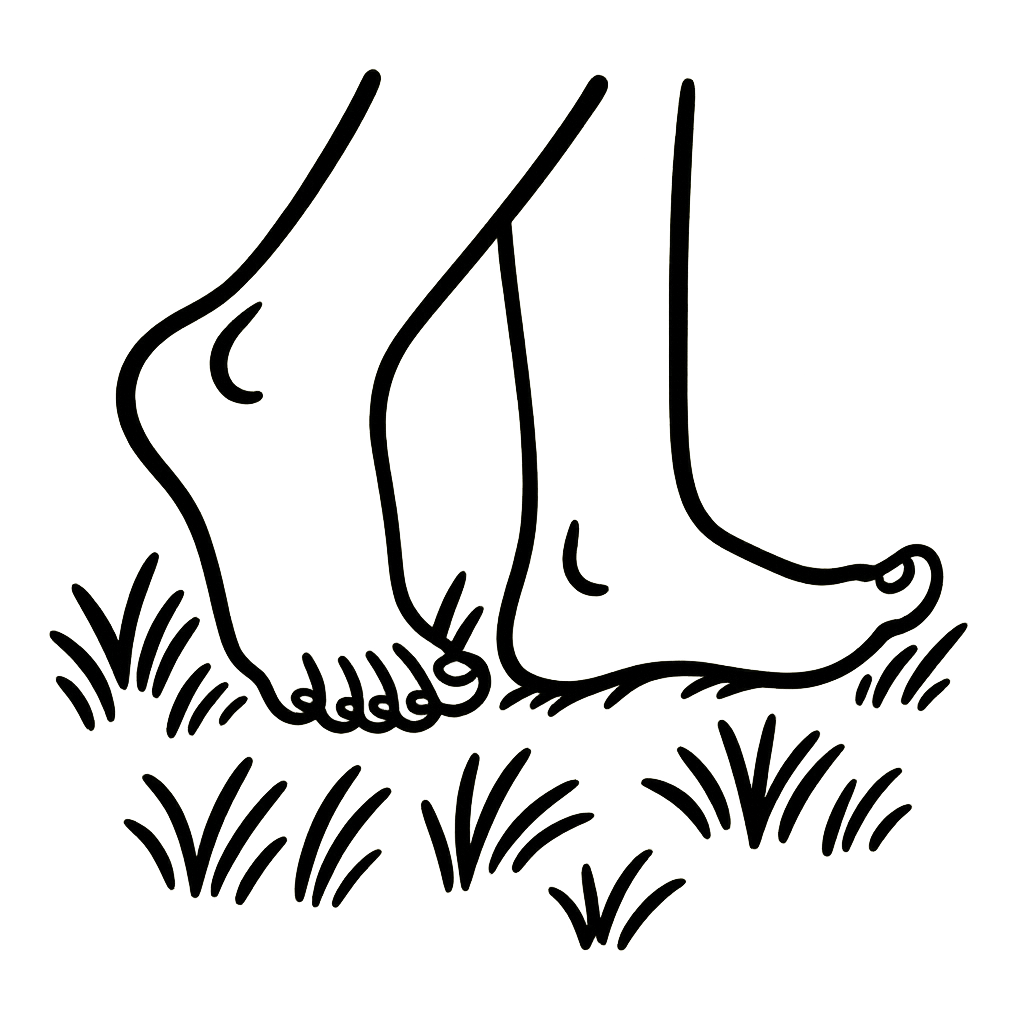
At CCCI we encourage children to explore and enjoy the tactile experience of barefoot play, if this is their preference. Research has shown that there are many benefits to playing in bare feet, which this article expands on some of the benefits that include:

Development of the brain and nervous system

The feet are the most nerve-rich parts of the human body, which means they contribute to the building of neurological pathways in the brain.

Allows the correct growth of feet

Many podiatrists claim that shoes can be much more harmful to little feet than nakedness can. Feet should be allowed to develop naturally, not conform to the shape of a shoe.

Aids in walking and balance

Shoes can constrict foot movement and negatively impact walking, balance, sensory development, and proprioception (the understanding of our body’s orientation in the space around us). Walking barefoot can also help children develop a natural, healthy, gait.

Strengthens the feet and body

When barefoot, we grip the ground more easily using the muscles of our feet and toes, strengthening them and reducing the risk of trips and falls. Walking barefoot allows us to maintain the full function of our feet.

Improves safety

Walking barefoot teaches children to assess a situation and adapt to it. If there is a rocky surface, children quickly learn to slow their pace and seek the most stable surface. When barefoot, children tend to step with less force and are more likely to notice if they are putting their feet on something sharp, therefore avoiding an injury. Research also suggests children who go barefoot tend to be less clumsy.

Provides direct connection to the natural environment

Not wearing shoes allows us to blow off steam, relax, and reawaken the senses. Research also tells us that children thrive in the outdoors and natural environments, so not having shoes as a barrier between our feet and the natural world increases the health promoting effects of spending time in nature for social and emotional wellbeing.

Risky Play

Risky play in early learning is about the desire to try something new or difficult, accompanied by the uncertainty of whether or not we will be successful. Risky play can have many forms, but the essence of each form is giving children the space to build confidence, explore their environment, find out what happens and test their skills on their own terms.

The physical motions required for many play experiences help children acquire, and ultimately master, fundamental movement skills—such as running, jumping, kicking, balancing. Risky play also helps in the development of perceptual abilities— depth, shape, size, movement perception—and general spatial orientation abilities. It also allows children to observe others mastering new skills, assess situations, find their own comfortable level of risk taking and feel great when they have mastered a new skill. Risky play at CCCI involves climbing equipment, yards with built in challengers such as small and large rocks to climb, and we continue to look for ways to improve our outdoor spaces to create more opportunities for age appropriate risk taking.

Nature based

Nature based play involves outdoor experiences for children that promote health, exploration, and connection with living and non-living elements of nature. This also provides opportunities for educators and teachers to teach children about the importance of the natural world and support the development of a love of our natural world and the importance of protecting our world. Physical and cognitive skills are further developed and emotional and social skills are enhanced, promoting creativity and confidence.

At CCCI we provide three outdoor spaces, built for specific age ranges and appropriate challenges for these age ranges. We also have excursions that include Pentridge Community Garden and our Bush Kinder site.
Nature play benefits a child’s development through improved physical and cognitive skills, enhanced emotional and social well-being, and greater creativity and confidence.

Bush Kinder

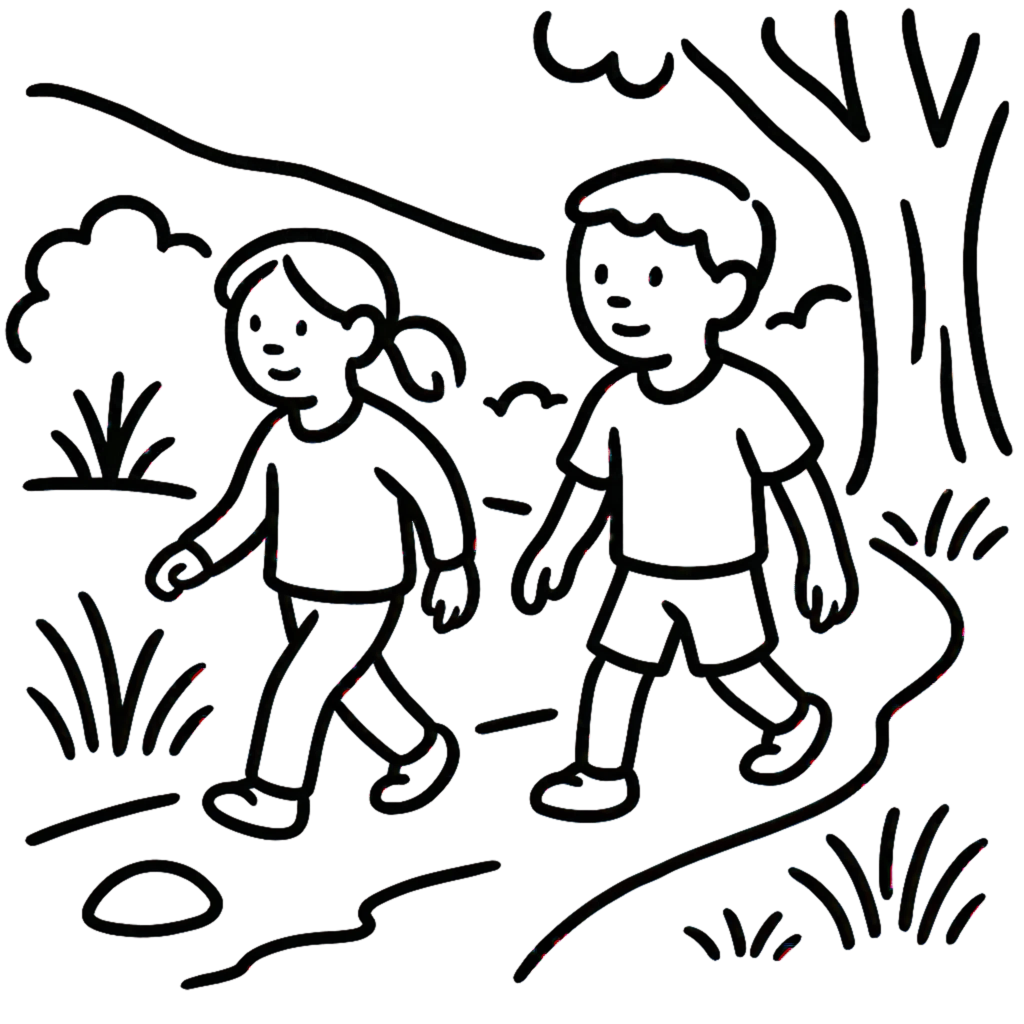
During school terms, our integrated four year old kindergarten children access our Bush Kinder program. The program operates one morning a week during school terms and this day changes every term to maximise the number of children experiencing the program.

Bush Kindergarten responds to a child’s right and need to access natural spaces for optimum learning and development. This is dedicated time for children to be outside in a quality, natural environment.

Attending a Bush Kinder session will offer your child the opportunity to connect to others with kindness and creativity, learn holistically and increase their communication, self-regulation and confidence.

Simultaneously, children will build a positive and protective relationship with our planet Earth, which will enable them to advocate for the survival of plant and animal species that are essential for human survival.

There is no additional cost for this program.

Multi-Age

At CCCI our sessional kindergarten programs will move to multi-age grouping in 2026, where a balanced mix of 3- and 4-year old’s will be learning together.
Here are some ways multi-age group kindergarten can benefit children’s learning:

Mixing 3 and 4 years old children fosters diverse interactions, helping young learners develop social skills, empathy, and cooperation. Older children can model positive behavior for younger peers, while younger children are exposed to more advanced social cues.

This model of kindergarten allows for peer learning, where older children can assist younger ones in grasping concepts.

Older children often have more advanced language skills, exposing younger children to a richer vocabulary for the younger group.

A study conducted by psychologist Peter Gray, concluded that multi-age play through groupings has the potential to bring early childhood learning and developmental benefits. He affirmed that by allowing younger children to learn from older playmates, younger children could gain more emotional support and social learning from older children than from those near their own age. The older children, on the other hand, also get to practice nurturance and develop vital leadership skills.

Mixed mixed-age environments can lead to deeper and lasting friendships.

Play across mixed age groups is often more complex, as older children extend their ideas or younger children follow the ideas suggested and contribute to the play supporting language development.

As a result, children in mixed-age grouping will develop friendships and engage in learning just as they would in the same age settings, with the added bonus of being able to access peer support and lead learning for other children. These settings offer children the opportunity to develop more sophisticated social skills.

Early Childhood
Language Program

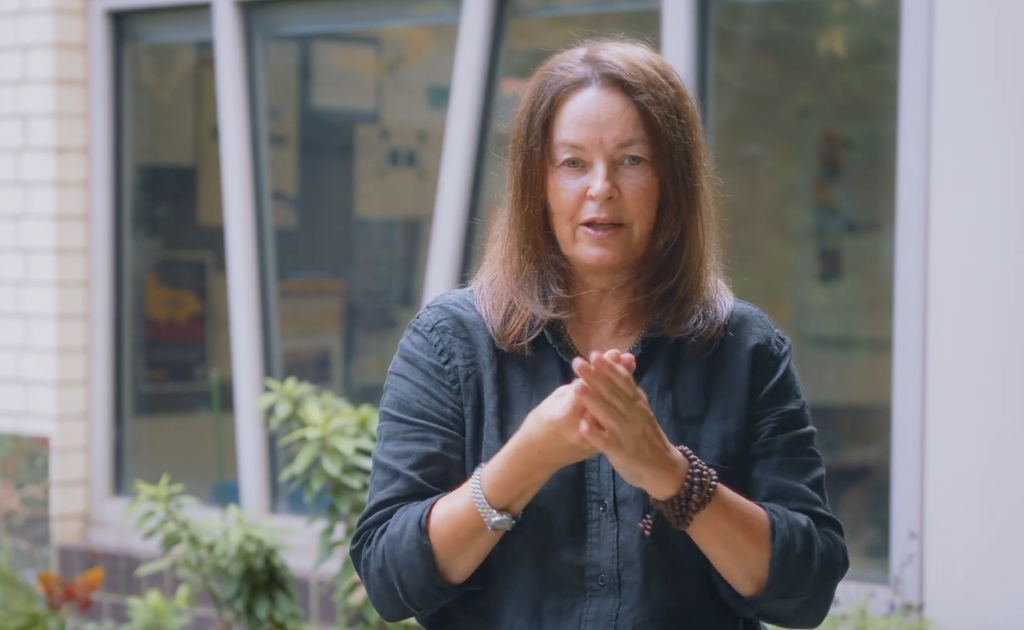
In 2019, we first received Department of Education funding for the Early Childhood Language Program and introduced learning Auslan (Australian Sign Language) as an additional language in our Kindergarten services. We now provide 2 sessions of Auslan per week during school terms, delivered by a qualified early childhood educator Julie, who is deaf and Auslan is her native language.

Learning Auslan in the early years offers children numerous benefits, including enhanced communication skills, increased language development, and greater social inclusion. By learning Auslan, children develop both verbal and non-verbal communication abilities, supporting them in expressing themselves and understanding others. It also promotes empathy and awareness of diverse communication needs, fostering an inclusive environment where all children feel valued. Early exposure to Auslan helps build cognitive flexibility and strengthens memory, contributing to overall language development and academic success.


Contact Us

Have a question? We’re here to help.

We recommend checking our FAQ page, you may find the answer you’re looking for there. If not, please contact us here or email office@coburgchildrencentre.org.au